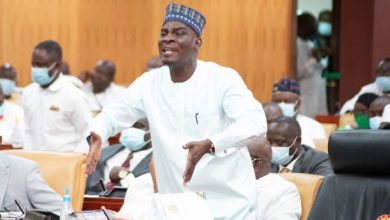
The Director of Elections for the New Patriotic Party (NPP), Evans Nimako, says the party will engage its leadership to assess the Supreme Court’s ruling declaring the political party delegate system unconstitutional and determine how best to comply with the decision.
Speaking on Eyewitness News on Wednesday, July 29, Nimako reaffirmed the NPP’s commitment to upholding the rule of law, stressing that the party would carefully study the judgment before deciding on its next course of action.
“As a law-abiding institution, coming from the court, we don’t have any option but to respect the pronouncement of the court,” he said.
In a 5-2 majority decision, the Supreme Court directed political parties to replace the delegate-based system with one that allows all eligible members to vote directly in presidential and parliamentary primaries.
The court further ordered political parties to put in place the necessary measures within one year to comply with the ruling.
Mr. Nimako, however, questioned the practicality of implementing the directive within the stipulated timeframe, particularly with regard to identifying members who qualify to participate under the new system.
He noted that political parties operate within established electoral timelines and said it remains unclear whether the responsibility for determining members in good standing would rest with the Electoral Commission or the political parties themselves.
“For us, as New Patriotic Party leadership was set, we’ll strategize and see how we can operate because we’ve always operated under a legal regime that enhances continuous development of democracy,” he said.
He added that while the court had issued its directive, political parties would need to study the full judgment to fully understand its implications and the required implementation process.
The Supreme Court’s ruling followed a suit filed by Prof. Kwabena Frimpong-Boateng, Dr. Nyaho Nyaho-Tamakloe and Dr. Christine Amoako-Nuamah, who argued that the delegate system limited the participation of ordinary party members and was inconsistent with the democratic principles enshrined in the 1992 Constitution.
Source:Fiilafmonline/CitiNews