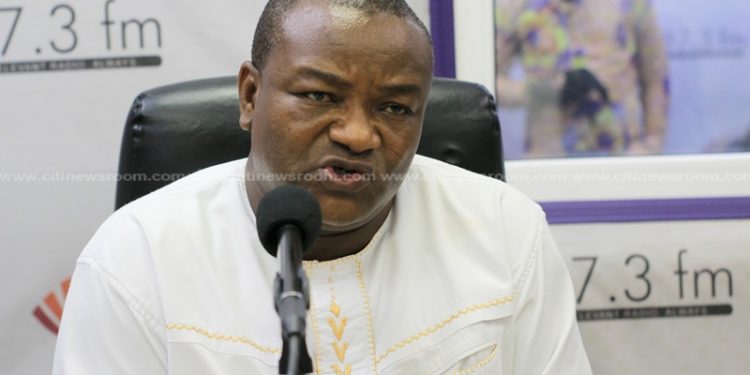
The Founder and Leader of the All People’s Congress (APC), Dr Alhaji Hassan Ayariga, has described the Supreme Court’s decision declaring the delegate system unconstitutional as a potentially significant step towards strengthening internal party democracy, but warned that its success will depend on how it is implemented.
In a statement following the ruling on Wednesday July 29, Dr Ayariga said the judgment could give ordinary party members a greater voice in selecting presidential and parliamentary candidates, while reducing the influence of a small group of delegates in internal elections.
The Supreme Court, in a 5–2 majority decision, declared the delegate system used by political parties to elect their presidential and parliamentary candidates unconstitutional. The court directed all political parties to adopt a new system within one year that allows all members in good standing to vote in internal primaries.
According to Dr Ayariga, one of the biggest benefits of the ruling is that it broadens participation by allowing eligible party members to directly choose candidates instead of leaving that responsibility to delegates.
He said such a system would make political parties more participatory, strengthen members’ sense of ownership and improve the legitimacy of candidates who emerge from broader membership votes.
Dr Ayariga also argued that expanding the voting base could reduce the influence of delegates and make it more difficult for candidates to concentrate solely on winning the support of a small group of party insiders.
He noted, however, that the ruling would not automatically eliminate money politics.
Instead, he said, it could simply change how money is used during internal elections, with candidates shifting from influencing delegates to spending more on campaign mobilisation, advertising, transportation and grassroots outreach.
“The solution is not simply to move from delegates to mass voting,” he said. “Otherwise, money politics may simply evolve from buying smaller delegates to buying mass mobilisation.”
Dr Ayariga said the judgment could also increase the accountability of party leadership, as executives would be compelled to pay greater attention to the views of the wider party membership rather than a limited number of delegates.
Despite the potential benefits, he cautioned that implementing nationwide direct primaries would present major logistical and financial challenges, particularly for smaller political parties.
According to him, organising elections involving all eligible members would require more polling centres, election officials, ballot papers or electronic voting systems, stronger voter verification processes, enhanced security and significant transportation and logistics.
He warned that these additional requirements could place enormous financial pressure on political parties.
Dr Ayariga also expressed concern that direct primaries could introduce new forms of electoral manipulation, including attempts to influence party membership registration, transport voters, exploit weaknesses in membership databases and engage in large-scale inducements.
He further warned that highly competitive nationwide primaries could deepen divisions within political parties and encourage candidates to appeal to ethnic, regional or religious sentiments to secure votes.
Another major challenge, he said, would be determining who qualifies as a party member in good standing.
Questions such as whether members must have paid dues, possessed membership cards or belonged to a party for a specified period would need to be clearly addressed to prevent disputes and manipulation.
He added that political parties would also have to develop credible and reliable membership databases capable of accurately identifying eligible voters and preventing multiple registrations.
Dr Ayariga said the Electoral Commission, Parliament and political parties would also need to determine who bears the financial and administrative cost of organising expanded internal elections.
He further noted that larger electorates would require stronger safeguards against vote buying, intimidation, ballot stuffing, identity fraud and other electoral malpractices.
Looking ahead, the APC leader said the ruling could significantly reshape Ghana’s political landscape.
He explained that in the short term, political parties would have to review their constitutions and internal electoral rules, while in the medium term, power within parties could gradually shift from delegates and executives to ordinary members.
In the long term, he believes the judgment could deepen internal democracy by giving party members greater influence over candidate selection and encouraging stronger membership structures.
However, he warned that if the ruling is poorly implemented, it could instead result in more expensive primaries, increased internal conflicts, voter manipulation and greater pressure on smaller political parties.
“The principle behind the ruling is potentially very positive for internal democracy,” Dr Ayariga stated. “However, direct primaries are not automatically democratic simply because more people vote. The process must also be transparent, affordable, secure and free from manipulation.”
He said broad participation, credible membership registers, transparent campaign financing and strong electoral safeguards would all be necessary if the ruling is to achieve its intended objective of strengthening democracy within Ghana’s political parties.
Source:Fiilafmonline/CitiNews