Life StyleNews
Mieke Bourne Ochieng Calls for Soil Conservation to Benefit Youth and Smallholder Farmers

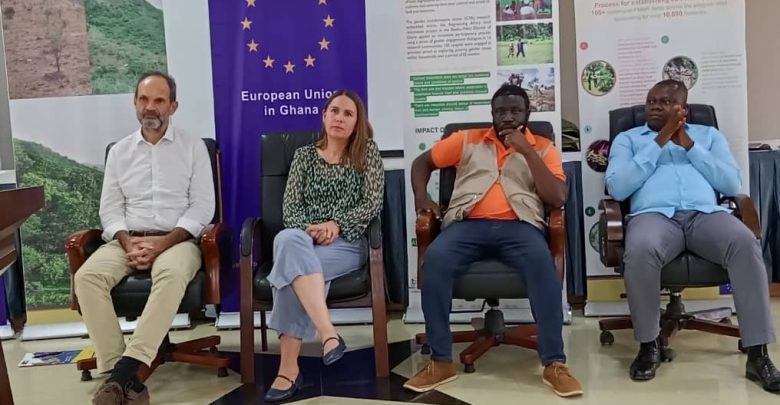
Mieke Bourne Ochieng, Lead for Regreening Africa at CIFOR-ICRAF World Agroforestry, has emphasized the need for soil conservation and restoration to benefit youth, women, and smallholder farmers.

Speaking at the launch of the second phase of the Regreening Africa programme, she highlighted the urgent need to restore degraded lands through tree planting and soil management.
“Over time, we have witnessed soil degradation and loss of productivity, which is exacerbated by climate change. Regreening Africa is focused on reversing this trend by bringing back trees through farmer-managed natural regeneration and tree planting to ensure soil conservation,” she stated.
The inception workshop for the programme gathered key implementing organizations and underscored the importance of addressing policy bottlenecks that hinder regreening efforts. Experts stressed that overcoming these barriers is crucial to tackling desertification, improving livelihoods, and enhancing food security across Africa.
Key policy recommendations from the workshop included promoting community access to resources from restored lands, strengthening decentralized natural resource management systems, securing land and tree access for women and youth, and resolving conflicts between pastoral and farming communities.
The second phase of the Regreening Africa programme, funded by the European Union (EU) with a budget of €15 million, is being implemented by CIFOR-ICRAF in collaboration with World Vision, Catholic Relief Services (CRS), CARE, Sahel Eco, and Agronomes & Vétérinaires Sans Frontières (AVSF).
Edward Anaba Akunjagra, Program Director for Agriculture, Livelihood, and Landscape at CRS, outlined the three key thematic areas for this phase: Expansion, Policy Engagement, and Green Value Chain.
“Using practical knowledge from Phase 1, we aim to expand our efforts by working with 60,000 households and achieving 100,000 hectares under restoration. Policy engagement with stakeholders will also be a major focus, alongside developing green value chains,” he explained.
Maxwell Amedi, Food Security and Resilience Technical Program Manager at World Vision International Ghana, emphasized the significance of the project in improving livelihoods.

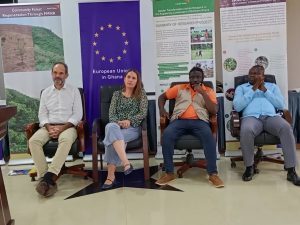
“For us, life in its fullness means ensuring the well-being of children, women, families, and communities. Our resources, economy, and well-being are heavily dependent on soil, land, and water bodies,” he stated.
The Regreening Africa programme continues to play a pivotal role in promoting sustainable land restoration and enhancing resilience against climate change across the continent.
Source:Fiilafmonline/Walkiyatu Issahaku