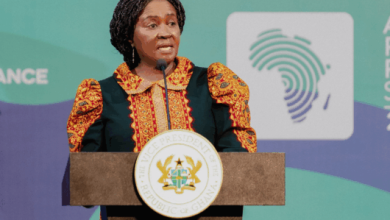
The University for Development Studies has spotlighted the critical role of guinea fowl production in Africa’s food security agenda, as Professor Abdul Rahman Ibn Iddriss delivered the university’s 23rd Professorial Inaugural Lecture.
The lecture, delivered under the theme “Nature’s Neglected Gift: Reproductive Insight into the Guinea Fowl and the Quest to Feed Africa,” was also significant as the first inaugural lecture from the School of Veterinary Sciences at the university.
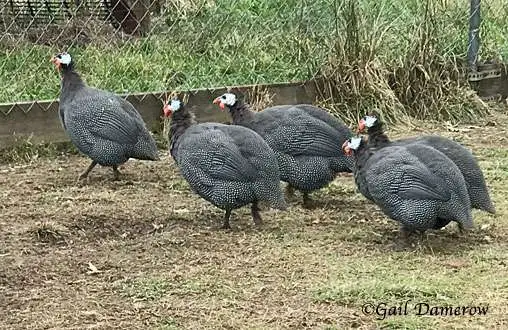
In his presentation, Professor Abdul Rahman Ibn Iddriss traced his research journey and highlighted his contributions to livestock production, with particular focus on the guinea fowl , a bird widely reared in northern Ghana and across parts of Africa, but one that has received relatively limited scientific attention.
He expressed appreciation to the audience for their support and noted that his research is aimed at providing practical, science-based solutions to the challenges confronting farmers.
According to him, his work has largely focused on addressing constraints in guinea fowl reproduction and breeding, using research approaches that range from whole-animal studies to cellular and molecular techniques.
Professor Ibn Iddriss explained that although his academic training was initially rooted in sheep and goat research, his experience in commercial poultry production between 2002 and 2005 inspired a shift in focus.
He said that experience, coupled with the limited scientific data available on guinea fowl and the bird’s growing importance in the region, motivated him to dedicate his research to unlocking its production potential.
The professor stressed that a better understanding of the biology and reproductive systems of guinea fowl is essential to developing effective breeding and production strategies.
He said generating new scientific knowledge on the species would help tackle production challenges, improve output, and strengthen the bird’s contribution to household nutrition, livelihoods, and agricultural development.
The lecture formed part of the University for Development Studies’ continued commitment to advancing research and promoting academic scholarship that responds to the development needs of Ghana and the wider African continent.
Source:Fiilafmonline/Walkiyatu Issahaku