Ghana is making significant strides toward achieving a 50% clean cooking energy target by 2030 under the UN Sustainable Development Goals.
The Clean Cooking Focal Person and Head of the Bioenergy Unit at the Ministry of Energy, Madam Doris Duodo, disclosed this at a stakeholders’ forum on clean cooking in Tamale. She emphasized that, government has introduced the Cylinder Recirculation Model as part of efforts to transition to cleaner and more efficient cooking technologies.

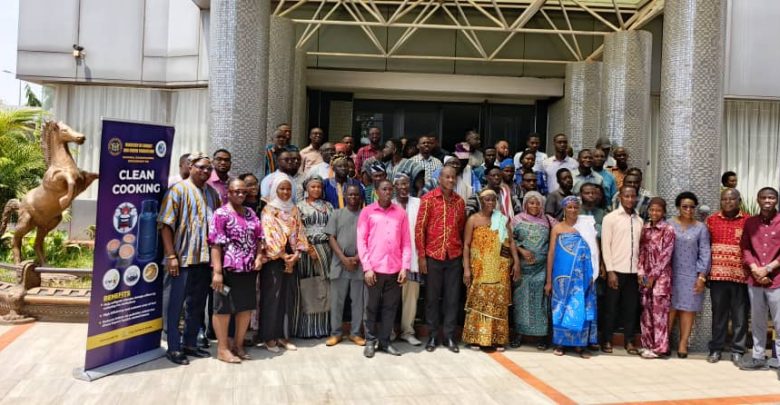
Speaking at a national stakeholder engagement on clean cooking, Madam Duodu stated that the workshop aims to gather input from various stakeholders for the development of Ghana’s National Clean Cooking Policy and Strategy.
“Clean cooking in Ghana has come a long way over the past three to four decades. However, many households still rely on inefficient cooking methods such as the three-stone fire, the buchiya, and the metal coal pot, which pose safety risks, contribute to air pollution, and are expensive to maintain.
The government is committed to introducing cleaner, more efficient cooking devices and fuels that will benefit the masses,” she said.
The World Bank is sponsoring the initiative, providing comprehensive documentation to guide Ghana’s clean cooking strategy.
Call for Clean Cooking Adoption
The Chief Executive Officer of the Ghana Alliance for Clean Cookstoves and Fuels, Mohammed Aminu Lukumanu, called for increased adoption of clean cooking technologies to enhance public health and environmental sustainability.

He highlighted the severe health consequences of using unclean cooking fuels, stating, “About 28,000 people die annually due to the use of unclean cooking sources, according to 2019 data. More research is needed to assess the full impact of these health issues.” Mr.
Lukumanu further explained that charcoal production in the northern sector is highly inefficient, requiring four units of wood to produce just one unit of charcoal. Despite this, charcoal consumption is higher in urban areas (27%) compared to rural areas.
Northern Regional Minister Advocates for Clean Cooking
The Northern Regional Minister, John Ali Adoif, also urged Ghanaians to embrace modern cooking technologies to mitigate health and environmental hazards associated with traditional fuels.
In a statement read on his behalf, he noted:
“The issue of clean cooking is not just a matter of energy policy; it is a matter of public health, environmental sustainability, gender equality, and economic development. While Ghana is rich in natural resources, many households still depend on charcoal and firewood, which contribute to deforestation and climate change.”
The Minister reaffirmed the Government of Ghana’s commitment to making clean cooking a national priority, stating that the National Clean Cooking Policy and Strategy is being developed under the leadership of His Excellency John Dramani Mahama.
The engagement brought together key stakeholders from government agencies, civil society, and the private sector to discuss strategies for achieving Ghana’s clean energy targets.
Source:Fiilafmonline/Walkiyatu Issahaku