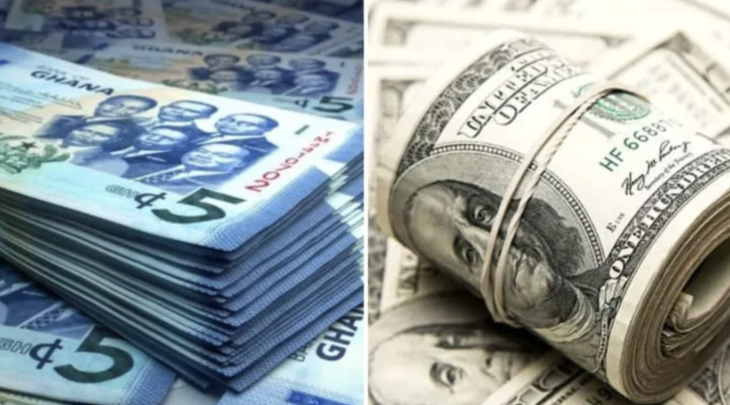
The Ghana cedi experienced modest losses in the interbank market while remaining broadly stable across the retail segment during the last two weeks.
In the interbank market, it depreciated by 0.47% against the US dollar, 1.36% against the pound sterling and 1.58% against the euro. It closed at mid-rates of GH¢11.69 to a US dollar, GH¢15.74 to the pound and GH¢13.46 to the euro.
The retail market activity was subdued, with the cedi easing marginally by 0.21% against the US dollar to GH¢12.13 to one American greenback, while the pound and euro traded largely unchanged at GH¢16.05 to the pound and GH¢13.70 to the euro.
On a month-on-month basis, the cedi fell 2.91% against the US dollar in July 2026, reversing June’s 3.35% appreciation despite the Bank of Ghana providing an estimated US$1.0 billion in forex support during the month, down from US$1.2 billionn in June 2026.
Databank Research this is broadly in line with its earlier projection where the dollar remained at range-bound, trading between GH¢11.60 and GH¢11.70 over the review period.
“Over the next fortnight, the Bank of Ghana’s US$1.0 billion August FX [foreign exchange] intermediation, alongside the recent US$371 million IMF ECF disbursement, should provide a useful liquidity buffer and anchor market expectations. However, we still expect underlying pressure from commercial demand and energy-related imports to keep the cedi on a mild weakening path”, it added.
As a result, it said it foresees volatility staying contained, with upside in US dollar/Ghana cedi likely capped near GH¢11.85 and downside supported around GH¢11.40/US dollar.
Meanwhile, the cedi began the week going for GH¢12.15 against one US dollar.
Its year-to-date gain stood at 0.41%.
Source:Fiilafmonline/JoyBuss