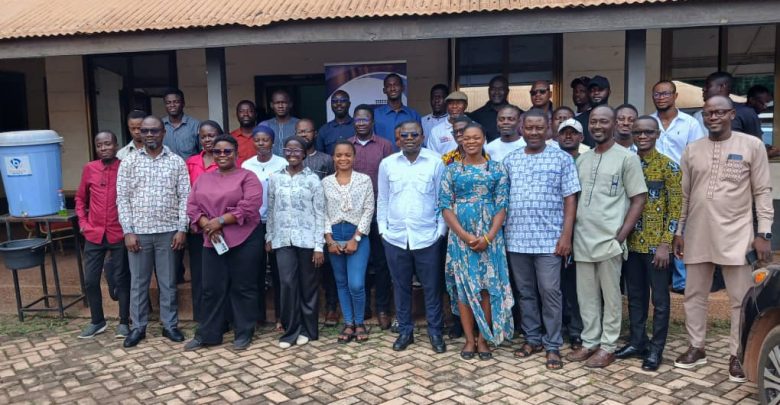
The Centre for Democratic Development Ghana (CDD-Ghana) has organized a media workshop on regulating political party financing in Ghana, bringing together journalists from various media houses to discuss transparency, accountability and democratic governance.
The organisation has attributed resistance among some Ghanaians to state financing of political parties to a lack of understanding of the concept and its potential benefits to Ghana’s democracy.
Speaking in an interview during the workshop, Director of Programmes and Operations at CDD-Ghana, Fredrick Adu-Gyamfi, said the huge amounts of money spent by political parties during elections have contributed to public concerns over state funding.
He noted that although many Ghanaians currently do not support public financing of political parties, they could better appreciate its importance of the concept, its implications and potential benefits for democratic governance are properly explained.
According to Mr Adu-Gyamfi, public financing, if properly regulated, could help address some of the financial challenges confronting political parties while strengthening Ghana’s democratic system.
The workshop also focused on the role of the media in promoting accountability, particularly in Northern Ghana.
Professor Eliasu Mumuni of the University for Development Studies’ Faculty of Communication and Media Studies said journalists have made significant efforts to hold political appointees, government officials, chiefs and other community leaders accountable for their actions and responsibilities.

He, however, expressed concern about fear and self-censorship among some media practitioners, saying political pressure, uncertainty and unseen forms of power sometimes prevent journalists from asking critical questions.
Professor Mumuni said this weakens democratic governance and limits the media’s ability to protect communities and hold powerful individuals accountable.
He therefore urged journalists to practice critical accountability journalism by remaining balanced, ethical, professional and well-informed.
He stressed that investigative journalism should be based on research, data and evidence rather than political affiliations.
Professor Mumuni also identified poor working conditions as a major barrier to effective accountability journalism, noting that low salaries and inadequate resources can undermine journalists’ confidence and independence when challenging powerful political and community figures.
He called on media owners, particularly private media operators, to improve the welfare of journalists by providing better remuneration and employment benefits, including pensions.
He argued that media organisations should not operate if they are unable to adequately compensate their staff.
Professor Mumuni further encouraged media houses to diversify their revenue sources, noting that advertising revenue alone is often insufficient to sustain quality journalism.
He recommended that media organisations explore grants, research funding and other sustainable sources of income to strengthen their operations and support independent journalism.
Source:Fiilafmonline/Walkiyatu Issahaku