A luminous outline of Nicolás Maduro and his wife Cilia Flores loomed over Caracas against the night sky in January. The steady light of hundreds of drones in a show put on by the government in Venezuela, suspended their image in front of the clouds, before rearranging to call for their return: “El pueblo los reclama,” they spelled out, “the people want them back”.
After a lightning operation by the US to spirit the deposed president and his wife out of the country on 3 January, Venezuela has found itself in limbo.
Despite Delcy Rodríguez, the former vice president and now acting Venezuelan leader, calling for the return of Maduro and Flores, there are no signs that’s going to happen. The former first couple are in New York in Brooklyn’s Metropolitan Detention Center awaiting trial for alleged crimes including drug trafficking, all of which they deny.
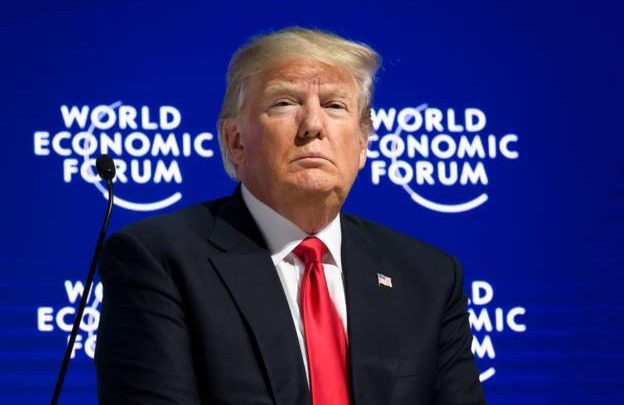
Nevertheless, Rodríguez – a Maduro loyalist – must maintain a tricky equilibrium: appealing to her socialist base by continuing to support Maduro through anti-imperialist rhetoric, while at the same time changing policies under pressure from US President Donald Trump, with the threat that she could be following Maduro if she won’t comply.
“Trump has implied that Venezuela is now a US protectorate, so she serves at the will of the US president,” says Christopher Sabatini, senior research fellow on Latin America at Chatham House think tank. “She has also been investigated by the DEA – there’s not a conviction, or bounty on her head, or indictment, but that threat has hung out there. The threat is, ‘we have the goods on you’.” The Drug Enforcement Administration (DEA) did not comment when approached by the BBC.
Rodríguez is now walking a diplomatic tightrope. “President Maduro had already warned of an attack of this nature due to the desperation of the United States’ energy voracity,” Rodríguez said in her first statement after the operation. Yet shortly afterwards, Trump announced that Caracas had agreed to deliver up to 50 million barrels of oil – and that he would manage the money.
And in her first speech to the National Assembly on 16 January, Rodríguez criticised “imperialist expansion by the United States”. That same day, Rodríguez met with CIA Director John Ratcliffe in Caracas. Rodríguez has been contacted for comment.
“Rodríguez’s legitimacy lies in the military strength of the US. And it will last if Trump wants it to. She cannot stand up to him,” says Carmen Beatriz Fernández, Venezuelan political analyst and CEO of DataStrategia, a political consultancy firm.
One question is how long Rodríguez can keep this double act of keeping both the Venezuelan left and the US administration onside? And if she had to choose, would it be a tough choice or does one side very obviously hold the power?
Yankee go home
Caracas, Venezuela’s capital city of around three million people, is festooned with banners calling for Maduro’s return and decrying US interventionism.
“She is handling communication in the best possible way and establishing guidelines for the country to continue moving forward despite the hijacking,” Leonardo Arca, 39, a civil servant, tells the BBC during a small pro-government march in Caracas last month. These big public displays calling for Maduro’s return are usually organised by the government, and it’s common for people to be told to go by their bosses.
He carries a banner that reads “Free Cilia”. Other people carry signs that read “Yankee go home” or “Bring them back” in English.Since Maduro and Flores were detained, what feels like years of changes have been crammed into a few short weeks.
The superpower of Chavismo, the left-wing political ideology that sustained the leaderships of Hugo Chavez and Maduro after him, is that it can quickly change course to keep the president – whoever that might be – in power.
On assuming the presidency on a “temporary” basis, Delcy Rodríguez – a lifelong Chavista – appointed mostly technocrats rather than ideologues with a nod to the need for pragmatism as Venezuela entered a new era.
Along with passing a law paving the way for US oil companies to start work in Venezuela, she also allowed for the release of numerous politicians and human rights activists who had been imprisoned for months or years. The opposition claims this has only happened because the US pressured them into it and point out that many political prisoners still remain in jail.
Trump has referred to Rodríguez as “a wonderful person” and “someone we have worked very well with.” Rodríguez, in turn, has acknowledged that there have been telephone calls and said that the tone is “courteous” and “mutually respectful.”
He has also acknowledged the diplomatic bind that Rodriguez is in. When asked by a reporter what he thought of her statements that Maduro is still the legitimate president, he dismissed it by saying: “I think she probably has to say that.”
Escalating pressure
Rodríguez has avoided making inflammatory remarks against Trump. But she has used language deeply rooted in Latin American communist opposition to US expansionism, referring to the US as a “lethal nuclear power”, “invader” and, “imperialist”.
Phil Gunson, senior analyst at the International Crisis Group think tank based in Caracas, says: “Washington must understand that she must continue with this rhetoric. It is a way of maintaining cohesion in the Chavista project, even though it is known that it is not real.”
All experts we spoke to agree that the pressure and threat from the US on Venezuela and Rodríguez is real.
“US pressure may escalate,” says Ana Milagros Parra, a Venezuelan political scientist. She says options for the US could include further intervention in Venezuelan territory, more economic sanctions and further oil blockades.
While Rodríguez must keep the leftist Chavismo grassroots happy, they only represent 15-20% of society and there are many Venezuelans who were never supportive of Maduro.
During his 13 years in power, Maduro’s popularity waned. His 2024 election win was called into question after widespread international accusations that the vote was rigged. Opposition tallies collected by their election observers – which were independently reviewed – showed their candidate won 67% of the vote compared with Maduro’s 30%. But nevertheless, Maduro assumed office claiming a 53% victory.
More than 7.9m Venezuelans have left the country since 2014, with 6.5m counted as refugees by the UNHCR, showing the scale of the civil and economic crisis that has gripped the country.
Source:Fiilafmonline/BBC