InternationalNews
Ten people linked to Kenya’s first-ever Ebola case quarantined as screening concerns grow

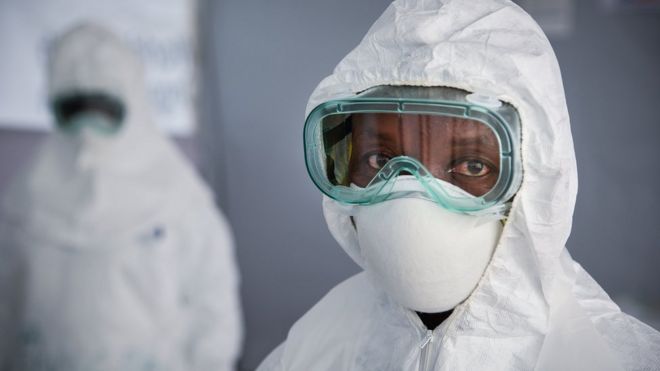
Ten people who came into contact with a man who died of Ebola in Kenya have been quarantined, health officials in the East African nation say.
They are also trying to trace 57 other contacts of the Kenyan patient after he travelled from the Democratic Republic of Congo, dying in hospital in Nairobi on Monday.
This is the East African nation’s first-ever Ebola case and there is now growing concern about the country’s screening measures.
The Africa Centres for Disease Control and Prevention chief has told the BBC that despite being sick for a month, the patient passed through multiple cities in DR Congo, driving to Uganda and eventually flying to Kenya without his sickness being detected.
“We know that he left Buta, a city in [northern] DR Congo, to drive to Kisangani. And from Kisangani, he took a flight to Beni. From Beni, he drove to Uganda. And from Uganda, he took a flight to Nairobi,” Jean Kaseya told the BBC’s Focus on Africa programme.
“What are symptoms he was presenting? Why was he not detected?” he asked.
The Ebola virus spreads through contact with infected bodily fluids such as blood or vomit.
The current outbreak in DR Congo, which began in May, has been caused by the Bundibugyo species of Ebola, which is relatively rare, with no approved vaccine or treatment – though trials are under way.
Kaseya said the Africa CDC was investigating the case, alongside the Congolese authorities. A team from the organisation was also due to meet the Kenyan health authorities.
What is Ebola and why is stopping the latest outbreak so difficult?
Kenya’s health ministry official Patrick Amoth said the patient might have passed screening after taking medications that masked his symptoms.
After arriving at the airport in Kenya’s capital, he was transferred by a relative to a hospital in the city where he died, and was buried on Tuesday in line with health safety guidelines.
Kenyan authorities have urged people not to panic, with the health ministry assuring of heightened surveillance at airports and border crossings.
But Dr Dennis Miskellah, a representative from Kenya’s main doctors’ union, said the Ebola case did not come as a surprise to him and most health workers.
He told the BBC’s Newsday programme that he had witnessed “lapses” at various border points, including with neighbouring Uganda and Tanzania, as well as at Kenyan’s main airport.
“How could you have been sick for almost a month plus in DR Congo, come all the way to the country through not just any small border point, but the main entry point, the main gateway into the country and pass unnoticed?
“That’s the question that most Kenyans are asking.”
The health ministry says it has intensified measures to contain the spread, with a joint response involving county administrations, humanitarian partners and others.
President William Ruto has said that surveillance and rapid response teams are on the ground, building on the systems that the country adopted following the outbreak in DR Congo in May.
His spokesman said Kenya had the capacity to detect, isolate and manage suspected cases, adding that so far more than 650,000 travellers had been screened and 267 samples tested.
Facilities in four main hospitals have been designated for the management of Ebola patients, including at the Nairobi Hospital, where the first Ebola patient died.
Source:Fiilafmonline/BBC