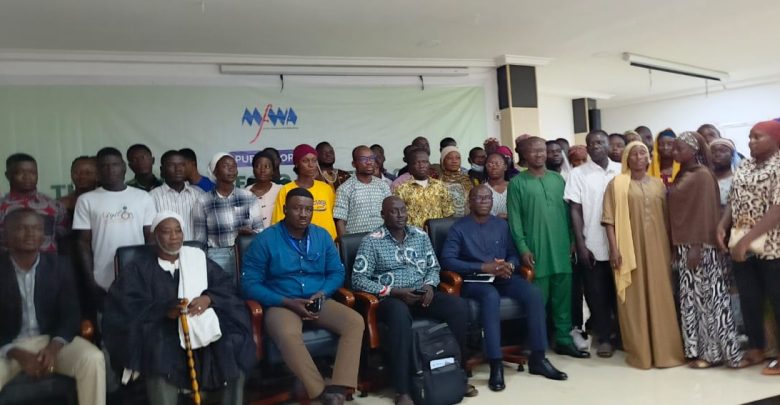
The Media Foundation for West Africa (MFWA) has held a public forum in Tamale to enhance awareness on food safety and the increasing use of agrochemicals in Ghana. The event brought together farmers, media practitioners, and key stakeholders to discuss the impact of chemical use on food production, public health, and the environment.

Participants were educated on the dangers associated with the improper use of chemicals on fruits and vegetables, as concerns continue to rise about food contamination and its health implications.
Dr. Kwame Sarpong Appiah, a crop scientist at the University of Ghana, expressed worry about the misuse, overuse, and misapplication of agrochemicals by farmers.

He called on the media and relevant institutions to intensify public education on the proper handling of these products.
“The programme was an insightful one, especially considering the way agrochemicals are being used in Ghana,” he said. “Agrochemicals are very important in sustaining the growing population.
Without them, it will be difficult to produce enough food. We need fertilizers and pesticides to increase productivity.
However, the issue is the misuse, overuse, and misapplication. When farmers do not get the expected results, the natural response is to increase the recommended dose, which leads to overuse.”
Dr. Appiah also urged media houses to critically assess agricultural product advertisements before airing them.
“I’m pleading with the media to vet the advertisements and claims made by agrochemical companies so farmers will know exactly what to expect from the products they apply,” he added.
Executive Director of MFWA, Mr. Sulemana Braimah, stressed the need for continuous dialogue between farmers, the media, and other stakeholders on food safety and public health.

He noted that the use of chemicals in agriculture has evolved over the years.
“Growing up, chemicals were mainly used to kill weeds and insects. Cow dung was what most people used as fertilizer. But that is not the case these days,” he explained.
“It’s not just about the food we eat—it’s about our health and the environment that sustains us. Over time, the land became less fertile, and fertilizers we
re introduced. Previously, families that had more cattle and access to cow dung had the most fertile lands.”
Mr. Braimah emphasized the role of the media in shaping public understanding of agrochemical use and urged journalists to prioritize reporting on food safety issues.

The forum forms part of MFWA’s broader efforts to promote responsible agricultural practices and safeguard consumer health.
Source:Fiilafmonline/Walkiyatu Issahaku