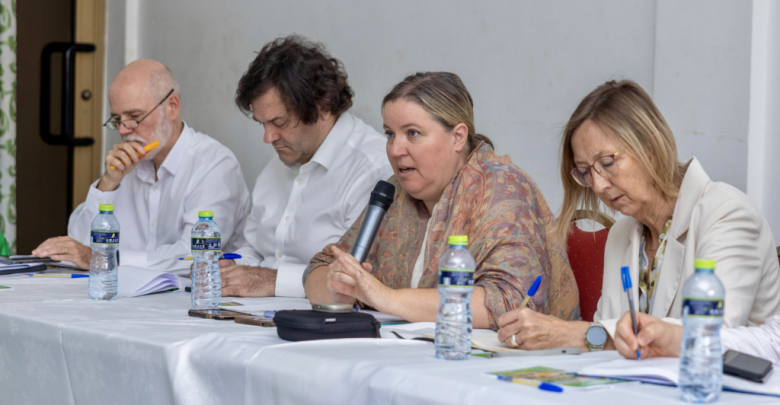
A distinguished delegation of heads of cooperation from renowned international organizations has convened in Tamale for a two-day conference aimed at strengthening ties with Ghana’s new government. The event, dubbed the Northern Ghana Deep Dive, brings together representatives from the World Bank, the United Nations, Canada, the UK, France, Germany, and the Netherlands.
Organized by the UK High Commission, the forum seeks to enhance collaboration among development partners, align international objectives with local priorities, and foster effective partnerships with government stakeholders. The gathering has attracted policymakers, government representatives, and international agencies to address key challenges and unlock the region’s development potential.
Despite Ghana’s significant progress in governance and human development over the past two decades, Northern Ghana continues to lag behind in multidimensional poverty indicators, with widening disparities between the north and south. The 2024 Multidimensional Poverty Report identifies the five northern regions, along with the Oti Region, as the poorest in the country, grappling with inadequate healthcare, education, livelihoods, and employment opportunities.
However, Northern Ghana also presents vast opportunities for investment, poverty reduction, security, and climate action. Speaking at the forum, the Development Director at the British High Commission, Richard Sandall, underscored the importance of direct engagement in the region.
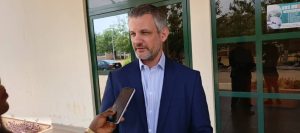
“Northern Ghana is such an important part of the development agenda for Ghana that we needed to come to Tamale together and make a concerted effort to listen, understand the context, the challenges, and the opportunities for collaboration,” he stated.

As part of the conference, the delegation engaged with 19 civil society organizations and international NGOs, which outlined priority areas including health, education, agriculture, climate, and governance. Sandall emphasized the need for better coordination among stakeholders.
“Yesterday, for example, we met with 19 or 20 civil society organizations and international NGOs, and they had clear priorities around health, education, agriculture, and climate. They also emphasized their interactions with the government, communities, and development partners. What became clear was that we need to improve cooperation and coordination to maximize impact,” he noted.
Business leaders highlighted investment prospects in Tamale and surrounding areas, pointing to opportunities in motorbike sales and the hospitality industry. Traditional chiefs also played a key role in discussions, showcasing their influence in community development.
Additionally, the delegation met with officials from the Ministry of Finance, the Ministry of Local Government, and other agencies to align priorities and strategies. Sandall noted that the government’s focus on decentralization, reducing regional inequality, and improving coordination aligns with the delegation’s objectives.
“We’ve already heard that the government’s priorities are in line with what we hope to see. They aim to strengthen decentralization, address regional inequality, and enhance coordination to reduce fragmentation caused by different actors introducing separate policies,” he said.
The conference marks a significant step toward fostering a unified approach to tackling development challenges in Northern Ghana, with international partners committed to working closely with the government and local stakeholders for sustainable progress.
Source:Fiilafmonline/Walkiyatu Issahaku