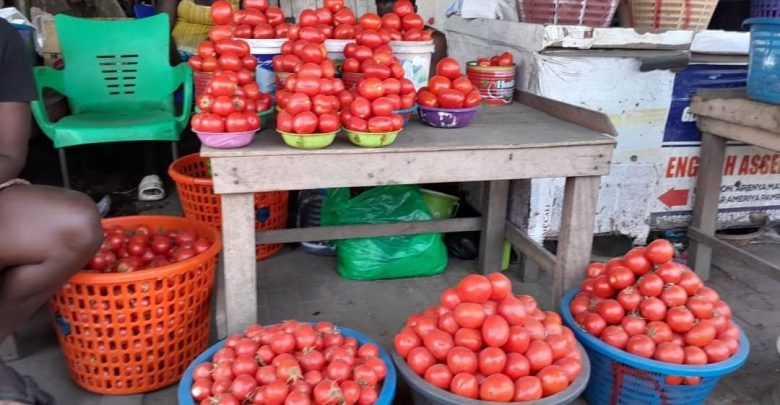
Ghana is targeting the production of about 100,000 tonnes of tomatoes from more than 10,000 acres of land under a new initiative to reduce the country’s dependence on imported tomatoes.
The Ghana Tomato Self-Sufficiency Initiative (GHATSI), launched at Anloga in the Volta Region on Tuesday, would be produced across 35 districts in 10 regions.
The GHATSI is being implemented by the Ministry of Food and Agriculture (MoFA) in partnership with FarmMate Limited.
Ghana’s annual tomato demand stands at about 805,000 metric tonnes, while current production is estimated at 510,000 metric tonnes, leaving a deficit of nearly 300,000 metric tonnes.
Data from MoFA indicates that about 30 per cent of local production, approximately 153,000 metric tonnes, is lost post-harvest.
Eric Opoku, the Minister of Food and Agriculture, said the initiative was designed to establish a reliable, year-round domestic tomato value chain linking farmers to irrigation, inputs, financing, insurance, processing, logistics and guaranteed markets.
He said Ghana’s tomato deficit was particularly experienced between December and July, while more than a quarter of tomatoes produced were estimated to be lost through post-harvest.
“We experience scarcity at one point and waste at another,” he said, explaining that the initiative sought to address the seasonal production cycle and poor coordination between production, aggregation, processing and markets.
Opoku said GHATSI would progressively scale up production to about 400,000 tonnes annually from more than 40,000 acres, with part of the output eventually processed into tomato purée and other value-added products.
Participating farmers would have access to a production financing package estimated at GH¢20,000 per acre, covering inputs, land preparation, soil testing, technical assistance, insurance and other production requirements.
The financing would be repaid through a structured off-take arrangement after harvest, with contracted buyers purchasing the produce directly from participating farmers.
Opoku said participating farms would also be covered by multi-peril crop insurance, with an insurance value of GH¢50,000 per acre in the event of an insured unforeseen contingency that destroyed the farm.
The initiative would also provide a pension arrangement under which an agreed portion of farmers’ income would be set aside after harvest to provide financial security in retirement.
The Minister said the Government would rehabilitate all 22 existing irrigation facilities in the Volta Region by the end of 2027 to support dry-season farming.
He announced plans to provide two new excavators to the Volta Regional Coordinating Council to support the dredging of lagoons, streams and rivers for irrigation.
The national tomato initiative is expected to generate over 150,000 direct and indirect employment opportunities during its first phase.
Source:Fiilafmonline/GNA