News
Ghana Anti-Corruption Coalition Holds Zonal Capacity Workshop on Auditor-General’s Report and CitizensEye App in Tamale

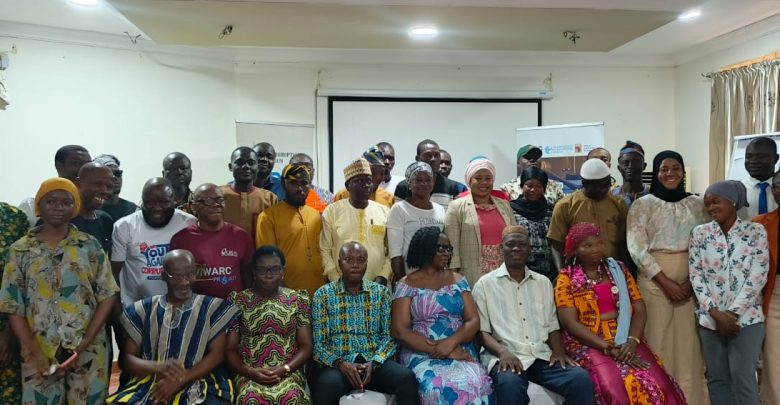
The Ghana Anti-Corruption Coalition (GACC) has organized a zonal capacity-building workshop in Tamale aimed at strengthening governance, accountability, and public participation in the fight against corruption.
The workshop forms part of a broader anti-corruption initiative that began in October 2025 and is expected to end in March 2026.
The project seeks to enhance citizen reporting on corruption through the CitizensEye App and to equip the Audit Service with standardized tools to improve compliance monitoring and accountability enforcement.
In her welcome address, Madam Cordelia Mensah, Regional Auditor for the Northern Region, said auditor reports have often been perceived as volumes of technical data or academic exercises. However, she emphasized that for civic actors, these reports serve as the “health checks” of Ghana’s democracy.
Madam Mensah highlighted the CitizensEye App as a critical accountability mechanism. The app, she explained, enables citizens to identify governance issues and report them directly to the appropriate authorities—helping to close what sometimes feels like an unbridgeable gap between citizens and duty bearers.
The workshop included practical sessions on navigating the app, reporting irregularities in real time, verifying cases, and encouraging collaborative oversight.
A Programs Officer with the Ghana Anti-Corruption Coalition, Samuel Harrison Kojo, said the initiative aims to ensure civil society actors fully understand the Auditor-General’s report and utilize the CitizensEye App effectively.
“The main aim of this activity is to get civil society actors to understand the Auditor-General’s report and also to understand the CitizensEye App, which citizens can use to report wastage, acts of corruption, and satisfaction levels with public services,” he said.
Mr. Kojo stressed that fighting corruption requires an informed citizenry.
“We are doing this because we believe that in the fight against corruption, we need an informed citizenry who can also play their role.”
He noted that GACC’s Local Accountability Networks annually track issues raised in the Auditor-General’s report and follow up with assemblies to determine the extent to which recommendations have been implemented.
The training, he said, was designed to build their capacity for this monitoring role.
On addressing corruption, he underscored the importance of education and accountability:
“We need more education to inform people about what is happening. And we need to see people punished for corruption. There is no better education than seeing that people who engage in corruption face consequences.”
Source:Fiilafmonline/Walkiyatu Issahaku