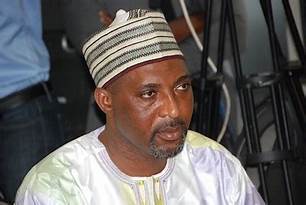
The Center for Public Opinion and Awareness (CenPOA) says it has taken note of recent media reports indicating that the Minister of Education Haruna Iddrisu has proposed the allocation of 2.5% of Ghana’s oil revenue to fund the National Democratic Congress’ (NDC) “No Fees Stress” policy for tertiary education.
CenPOA says they disagree with this proposal and considers it a misplaced priority at this stage of Ghana’s development.
They said in a statement that while education remains a cornerstone of national progress, it is the view of CenPOA that the government’s obligation to provide free education should reasonably extend only up to the Senior High School (SHS) level.
By this stage, they said, citizens would have attained functional literacy and numeracy, positioning them to contribute meaningfully to society.
“Tertiary education, on the other hand, should remain optional and primarily supported by individuals, with government providing targeted scholarships and interventions only where resources allow. Indeed, even in many advanced economies, tertiary education is not entirely free but is supported through mixed models of funding, grants, and private investment.
“At present, Ghana continues to grapple with challenges such as schools operating under trees, infrastructural deficits at the basic level, and the sustainability of the Free SHS program itself,” the statement said.
Diverting scarce oil revenues to fund tertiary education under the “No Fees Stress” initiative risks worsening these pressing concerns, CenPOAsaid.
They further viewed this proposal more as a populist promise aimed at electoral gains than as a deliberate, pragmatic policy for long-term national development.
“Rather than channeling vital oil revenues into free tertiary education, CenPOA believes the government should prioritize investing in sustainable industries and job creation. With thousands of unemployed graduates already struggling to find work, expanding productive sectors of the economy will not only provide employment but also generate real demand for tertiary education in a manner that is sustainable and growth-driven.
“CenPOA therefore urges policymakers, stakeholders, and the general public to approach such proposals with caution, focusing instead on strengthening foundational education and creating an enabling environment for economic growth.”
Source:Fiilafmonline/3News