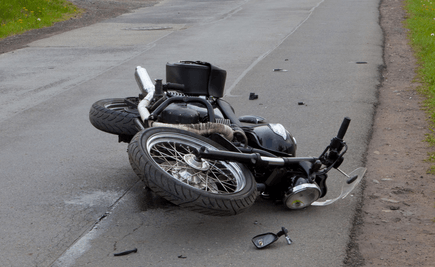
The human toll of motorbike accidents in the Northern Region of Ghana is reaching alarming levels, leaving families shattered and communities in mourning.
Despite tighter road safety laws, public education campaigns, and mandatory helmet regulations, deaths and life-changing injuries continue to rise driven largely by widespread disregard for safety measures.
Disturbing Numbers Behind the Crisis
Data from the Northern Regional Road Safety Authority paints a troubling picture. In 2022, the region recorded 135 motor accidents. That figure declined to 78 in 2023 and stands at 47 so far in 2024. While the downward trend suggests some progress, authorities warn that fatalities remain disproportionately high because many riders still refuse to wear helmets.
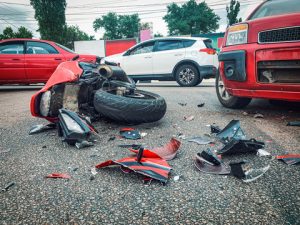
Tamale, where motorbikes are the dominant mode of transport, remains a hotspot. According to the Assistant Planning Manager of the Road Safety Authority, Misbawu Wundo, more than 60 percent of all road crash deaths in the region involve motorbike riders, most of them unprotected.
“If ten motorbikes pass you, only one or two riders will be wearing helmets,” Wundo said. He likened the impact of an unprotected head during a crash to “a watermelon smashing against the road.”
Lives Cut Short, Families Left Behind
Behind the statistics lie stories of grief and irreversible loss. Media practitioner Mohammed Gaddafi recalls the death of a colleague who lost his life in a motorbike crash after failing to wear a helmet.
“Just a week before his death, we had celebrated the naming ceremony of his first child,” Gaddafi said. “When we visited the family after the burial, seeing his widow and newborn was devastating.”
Painful Lessons Learned Too Late
For Dr. Musah Yamba Issahaku, the dangers of reckless riding are deeply personal. His son, Ismail, survived three separate motorbike accidents while working as an okada rider in Accra. The third nearly claimed his life.
“He ran under a tipper truck. His skull cracked, and he sustained multiple fractures. We spent huge sums to save him,” Dr. Issahaku recounted.
Ismail says the crash permanently altered his life.
“I lost my job, my sense of smell, and my sense of taste,” he said. “I was reckless before, but now I warn young people, learn from my mistakes before it’s too late.”
A Call for Discipline and Responsibility
Outgoing Base Commander, Air Vice Marshal Joshua Lartei Mensah Larkai, says the military enforces strict training and safety standards to protect its personnel.
“Our officers must be trained and properly dressed, including wearing helmets. We do not encourage riding unless these conditions are met,” he said.
From the pulpit, Rev. Father Saaki of St. Theresa Parish in Lamashegu echoed similar concerns, noting that many young people risk their lives daily, traveling long distances on poor roads without basic protection.
Beyond Roads: A Public Health Emergency
Road safety advocates argue that the crisis has moved beyond transportation and is now a public health and socio-economic emergency.
They are calling for tougher enforcement and community-based interventions involving traditional leaders, religious institutions, and the media.
The message, they insist, is straightforward: helmets save lives.
Until attitudes change and safety becomes a shared responsibility, Northern Ghana will continue to pay a devastating price, measured not in statistics, but in broken families and lost futures.
Source:Fiilafmonline/Walkiyatu Issahaku