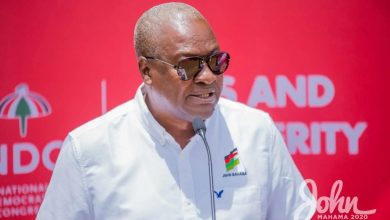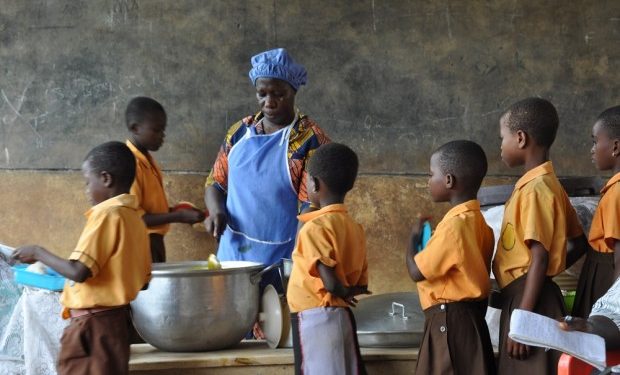
President John Mahama has directed all basic and secondary schools to buy only Ghana-made rice, maize, chicken, and eggs for their meals.
The move aims to boost local farming and reduce reliance on imported food.
The Finance Minister, Dr Cassiel Ato Forson said this while presenting the 2026 Budget in Parliament on November 13.
“Mr. Speaker, President Mahama has also directed all schools, from basic to secondary, to purchase rice, maize, chicken and eggs produced in Ghana only. The Ministry of Education, the Ghana Education Trust Fund (GETFund), the School Feeding Programme, the Free Secondary Education Secretariat and the National Food Buffer Stock Company are accordingly directed to ensure strict compliance,” he said.
Government says the directive will channel school feeding funds back into the local economy while supporting Ghanaian farmers and agribusinesses.
He also announced that Government has saved over US$250 million after successfully renegotiating all Power Purchase Agreements (PPAs) with Independent Power Producers (IPPs), a move government says has restored financial stability to the country’s energy sector.
According to the Finance Minister, the renegotiations—carried out entirely by a team of Ghanaian experts at no cost to the state—also restructured the remaining US$1.1 billion legacy debt over a four-year period ending in 2028.
This, he said, has eased cash flow pressures and set the energy sector on a sustainable path.
Speaking in Parliament during the presentation of the 2026 Budget Statement, the Minister noted that government is now up to date with payments to the IPPs.
In 2025 alone, Ghana paid US$300 million, with another US$345 million set aside for 2026.
“For the first time in over a decade, Ghana’s energy sector is operating on a predictable and sustainable payment schedule,” he said, adding that all new invoices are being settled promptly to prevent the accumulation of new arrears. The renegotiations have also brought relief to consumers, with tariffs for solar projects such as BXC from 18 cents to 6.5 cents per kilowatt-hour—one of the lowest rates in the sub-region,”Dr Forson said.
The government says these measures are already paying off.
“The Electricity Company of Ghana (ECG) has almost doubled its monthly revenue—from GH¢900 million in 2024 to GH¢1.7 billion in 2025—thanks to improved compliance with the Cash Waterfall Mechanism,” he said.
“Cabinet has also approved a plan to open up power distribution to private participation, with concessions expected to be awarded in 2026. Officials say this will help boost efficiency and further stabilize electricity supply. Government believes the reforms mark a major turnaround in the energy sector, reducing fiscal risks and setting the stage for long-term growth,” Dr forson stated.