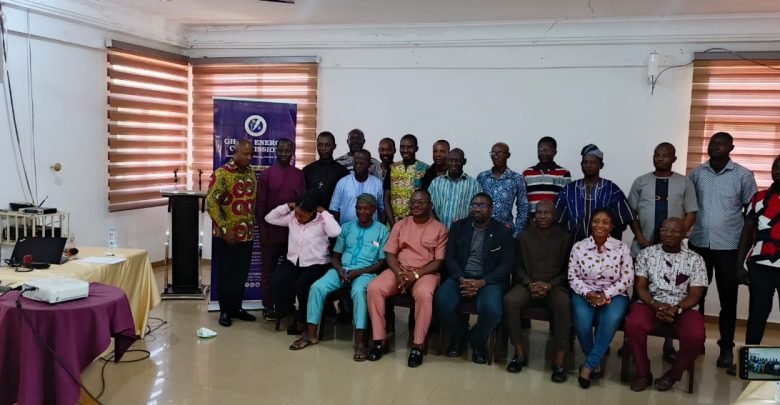
The Energy Commission Ghana has organized a stakeholder awareness and sensitization workshop on draft regulations for electric vehicle (EV) charging infrastructure and battery swap systems.

The workshop brought together stakeholders and energy experts to deliberate on the proposed regulatory framework, while also encouraging participants to explore investment opportunities in the EV charging station business.
Participants were taken through the three main types of EV charging systems—Level 1, Level 2, and Level 3—each offering varying charging speeds and infrastructure requirements.

The proposed regulations, which are yet to be laid before Parliament, seek to establish minimum standards across the EV ecosystem.
Key provisions include the registration of residential charging stations, licensing of importers and sellers of charging stations and battery swap systems, as well as licensing for operators of public charging and battery swap services. The framework also proposes certification requirements for electricians involved in the installation of EV charging and battery swap infrastructure.
In an interview, Joyce Ocansey, Assistant Manager for the Drive Electric Programme at the Energy Commission, explained that the sensitization forms part of follow-up engagements from earlier consultations held in 2022.
She noted that the initiative is necessary due to the increasing adoption of electric vehicles in Ghana, emphasizing the need to safeguard the national power grid, ensure public safety, and protect consumers.
According to her, although Ghana may not yet be fully prepared for large-scale EV adoption, the government is taking proactive steps to promote a sustainable transition—particularly in the two- and three-wheeler transport sector.
She referenced a 2025 market study which identified several business opportunities within the EV space, including the establishment of charging stations, operation of battery swap services, and integrated models that combine EV sales with charging infrastructure.
Ms. Ocansey indicated that the sector is expected to be largely driven by private investment, with government providing an enabling environment through policy direction, regulatory support, and strategic initiatives such as a national charging map and grid impact studies to ensure equitable infrastructure distribution.
She further highlighted the environmental benefits of the transition, noting that Ghana’s transport sector accounts for nearly 50 percent of emissions. She said shifting to electric vehicles—especially when powered by renewable energy sources like solar—could significantly reduce greenhouse gas emissions, air pollution, and related health risks.
The draft regulations will cover the entire EV value chain, including manufacturing, importation, installation, operation, and ownership. Under the proposed framework, individuals and businesses will be required to register or obtain licenses from the Commission before operating, with sanctions to be enforced once the regulations are finalized and approved.
Source:Fiilafmonline/Walkiyatu Issahaku